Preprint · Mar 2026
The “registration code” reading fails its own predictions
Kriger and Hunt · Zenodo 19103880
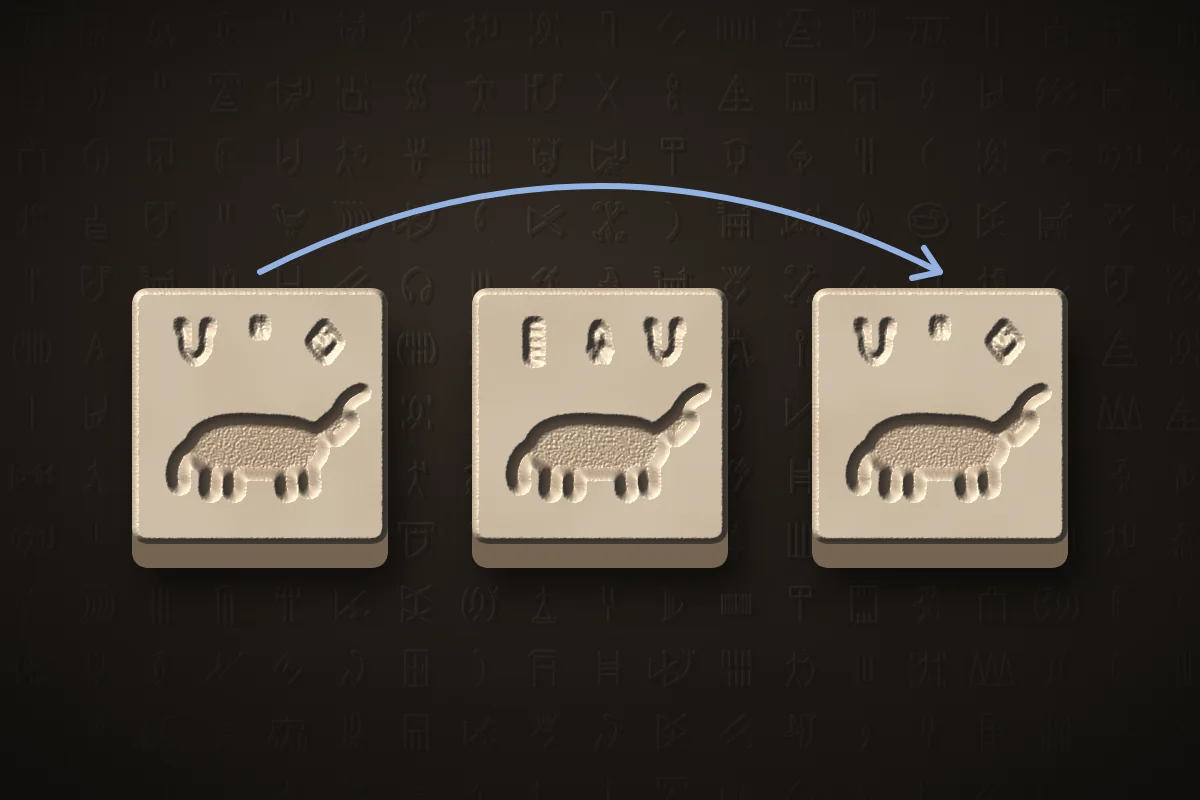
In a sentence
They argued seal texts work like ID numbers. On 646 seals, the texts repeat more than chance, not less.
In plain words
This preprint argued that seal texts are like registration numbers: each one unique, with numbers in fixed places. We ran their tests on 646 Mohenjo-daro unicorn seals. The texts turned out less unique than chance, and the number patterns did not hold.
Technical detail
Uniqueness 88.2% vs 99.2% under random redeal (below every null draw). Numerals in the second-to-last slot 19.0% vs 18.7% shuffled (p = 0.46). Their dominant “2” is mostly the M99 connective of the opening formula. Near-duplicates differ at an edge in 20 of 80 pairs, so “never at edges” is false. The edge pattern in positional entropy replicates, but it was already known.
What we take from it
ClosedNothing to borrow. Their best result was already known, and the rest fails.