Paper · 2019–2023
The texts as labels for goods and permits, not names
Bahata Ansumali Mukhopadhyay · Humanities and Social Sciences Communications (2019, 2021, 2023)
In a sentence
Stroke signs as units of measure, crop signs as goods, and no personal names.
In plain words
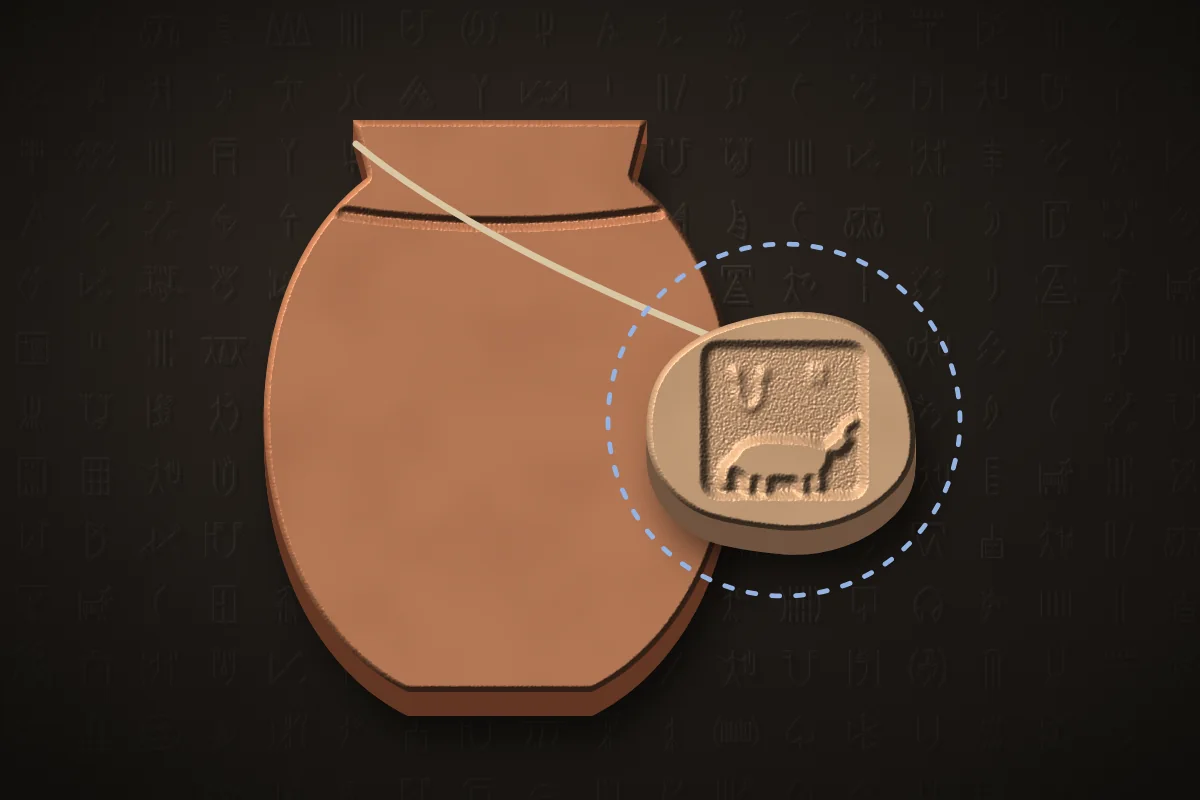
Mukhopadhyay reads the inscriptions as practical labels: what a parcel holds, how much, and who may pass, rather than people’s names. Stroke signs would be units whose value depends on the goods, and some signs would stand for crops or other commodities. In 2025 she proposed the fish signs mean gems.
Technical detail
Logographic or semasiographic “formalised data carriers”: metrological strokes, commodity signs after numerals, the jar as a phrase-final function sign, Kanmer tablets as gate passes; pīlu “elephant/tooth” as a loanword (2021); fish = maṇi “gem” (2025, SSRN 5079207).
What we take from it
Next to testA first test found no sign tied to a craft at two sites, but it had too little data to tell. The fish = gem prediction needs find spots from bead workshops, which we have asked excavators for.
The idea we are borrowing
Check whether fish signs cluster at bead-making sites, as the “fish = gem” reading predicts
Where it stands: Next to test.