Paper · 2025
How computers are opening up Proto-Elamite, the Indus script’s unread neighbour
Monroe, Kelley, Born and Sarkar · Near Eastern Archaeology 88(4):316–323, building on Born et al. 2019–2023
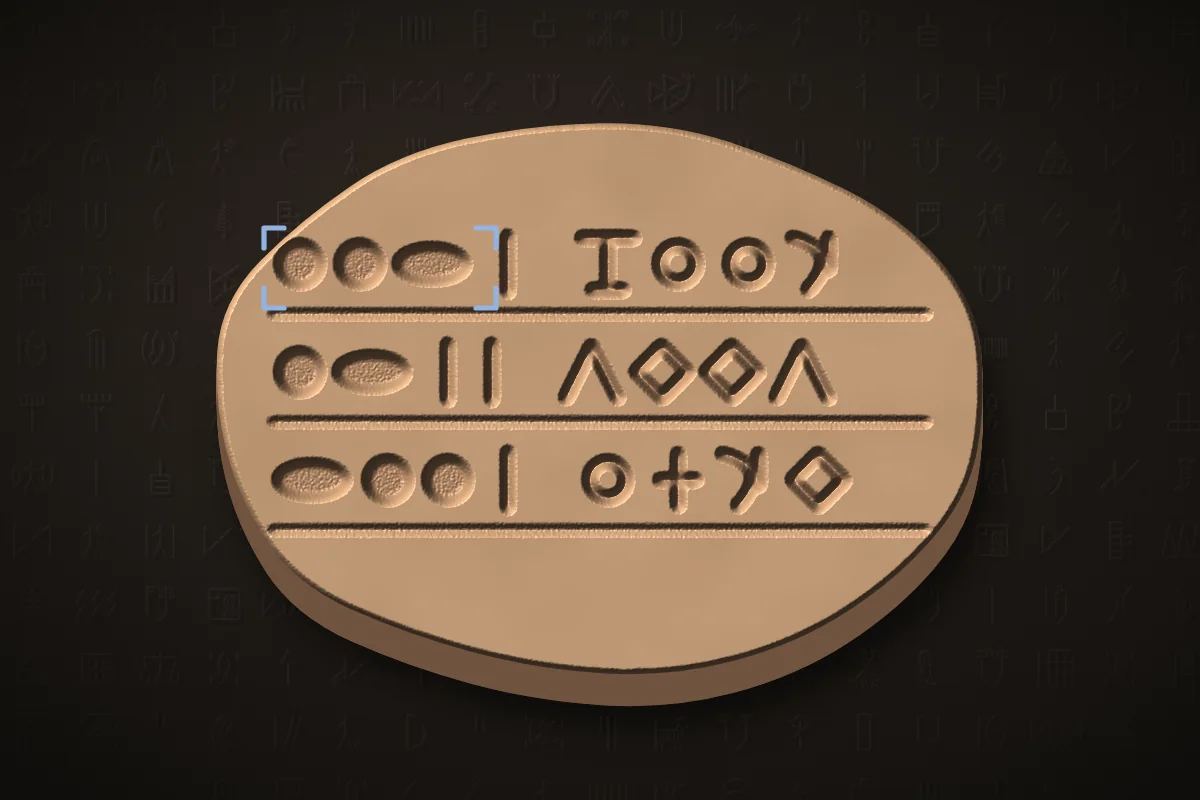
In a sentence
Without knowing the language, they found which signs head an entry, which are built from parts, and which number system each count uses.
In plain words
Proto-Elamite, from Iran, is unread and about as old as the Indus script. Teams have used computers to learn how its texts are organised: which signs start an entry, which complex signs are made of simpler ones, and which counting system each number belongs to, by looking at what is being counted. None of this needs the language.
Technical detail
Born et al. (2019, 2021, 2023): topic models (LDA) for genres, “header” signs, complex-sign compositionality, and disambiguation of numerals by number system. These are the methods that worked on an undeciphered administrative script without a language. They have not been applied as a set to the Indus texts.
What we take from it
TestedWe tried the pieces that fit. Indus signs that look like Proto-Elamite or proto-cuneiform signs do not behave like them (0 of 5 tests), complex signs do not split into their parts, and no known number system matches the Indus counts. Still untried: letting a model find genres from scratch.
The idea we are borrowing
Use the Proto-Elamite toolkit: look-alikes, compound signs and number systems
Where it stands: Tested.