Preprint · 12 Oct 2026
One sign that never follows another
Dominik · Zenodo 23307028
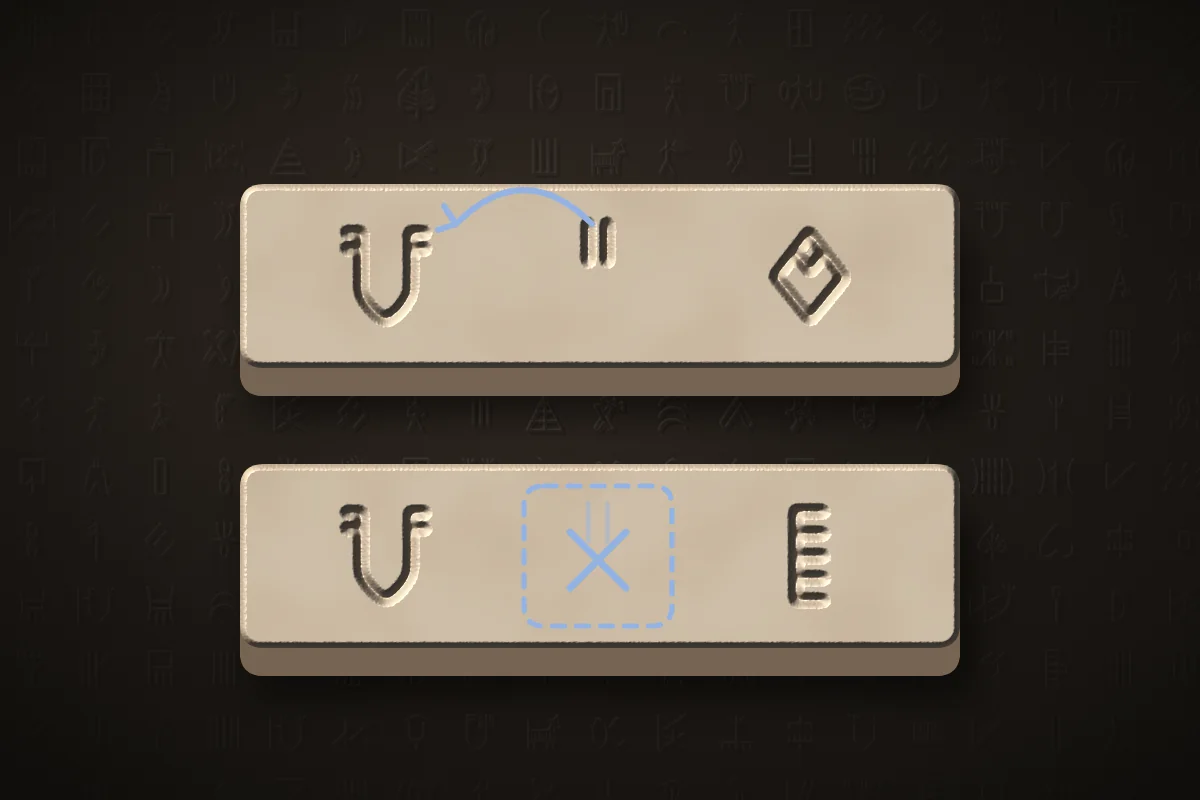
In a sentence
A paper on sign grammar makes one sharp claim that can be checked in minutes.
In plain words
Most of the paper’s grammar gain is tiny. But it makes one clear claim: a certain sign never comes right after the arrow sign, yet often comes right after the jar sign. A rule that sharp is easy to test on texts the author did not use.
Technical detail
Held-out gain of only 0.014 nats per sign (CI 0.010 to 0.018) on 6,778 tokens, and the author notes the contexts were chosen in advance. Sharp claim, in Wells numbers: W090 never follows W520 (0 of 136) but follows W740 in 69 of 994 cases (7%). The corpus inputs are withheld.
What we take from it
TestedWe tested it. The pattern shows in reading order on the main texts, but not on texts kept aside, and gaps this sharp are common: 24 of 57 similar sign pairs have one. So it is real but not special.
The idea we are borrowing
Check a sharp grammar rule: one sign that supposedly never follows the arrow sign
Where it stands: Tested.