News

New research on the Indus script, summarised

The latest papers and the landmark ones, each in a sentence, in plain words or in full detail. For every paper we say what idea we take from it and where that idea stands.

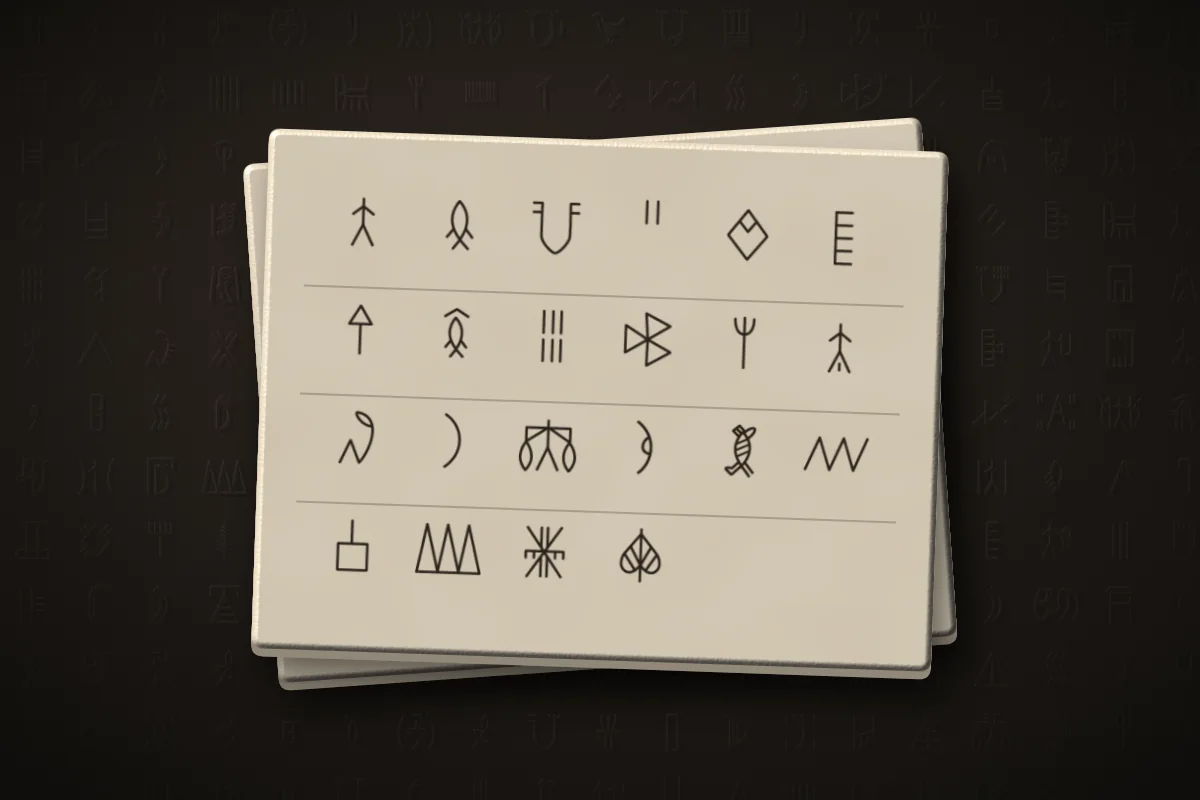
Pictures are editorial illustrations, not real objects or transcriptions.

Detail

01Latest

Latest

Dataset

An open test for filling in missing signs

Kanichira, Singam, Katyal and Somala (IIT Hyderabad) · Zenodo 24164070

A team released code, data and predictions for a model that guesses damaged or missing signs.

Many seals are chipped, so some signs are lost. This team trained a model to fill the gaps and published everything: the code, how they split the texts for training and testing, and the model’s guesses. Because it is all open, anyone can check how good it really is.

Neural masked-sign restoration with public train/test splits and predictions (CC BY 4.0 and MIT, about 6 MB). The record page does not describe the corpus or the model. The main risk is leakage: near-copies of the same seal text can sit on both sides of a split, which inflates scores.

Tested

What we take from it: We graded it. 36% of its test texts have a near-copy in its training texts. On clean texts the neural model does no better than a simple three-sign model (28.5% vs 29.8% right on the first guess).
Read the full summary: An open test for filling in missing signs →
Preprint

One sign that never follows another

Dominik · Zenodo 23307028

A paper on sign grammar makes one sharp claim that can be checked in minutes.

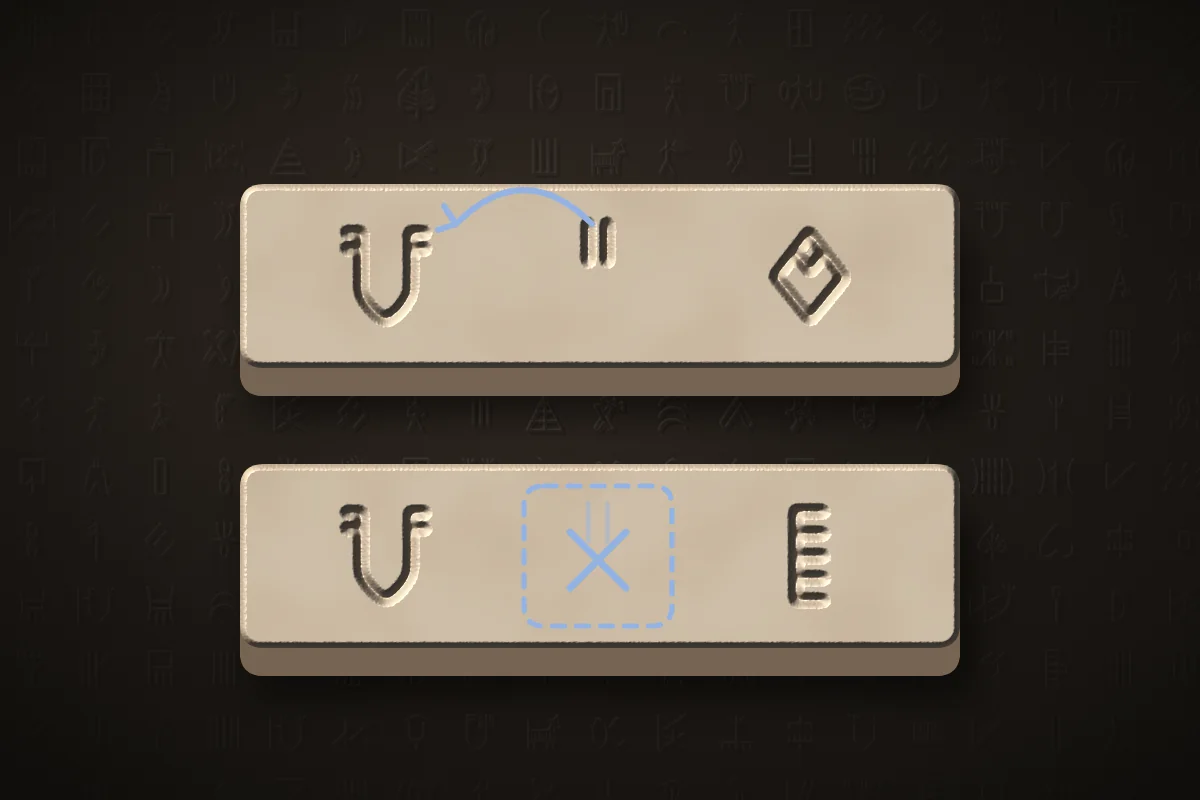
Most of the paper’s grammar gain is tiny. But it makes one clear claim: a certain sign never comes right after the arrow sign, yet often comes right after the jar sign. A rule that sharp is easy to test on texts the author did not use.

Held-out gain of only 0.014 nats per sign (CI 0.010 to 0.018) on 6,778 tokens, and the author notes the contexts were chosen in advance. Sharp claim, in Wells numbers: W090 never follows W520 (0 of 136) but follows W740 in 69 of 994 cases (7%). The corpus inputs are withheld.

Tested

What we take from it: We tested it. The pattern shows in reading order on the main texts, but not on texts kept aside, and gaps this sharp are common: 24 of 57 similar sign pairs have one. So it is real but not special.

Read the full summary: One sign that never follows another →
Preprint

A fair way to ask “is this a language?”

Zhang and Sheng · arXiv 2610.34499

Give both explanations the same effort, then judge them on text neither has seen.

Is the Voynich manuscript a hidden language, or meaningless copying? The authors write each explanation as a machine that produces text, give both machines the same amount of tuning, and score them on pages kept aside. They checked the method on 28 texts in 16 languages and on planted messages.

Both hypotheses (meaningless copying vs enciphered language) are written as generative programs, fitted with the same search budget and compared on held-out statistics. Adds a decipherment-free signal (the same word pairs keep sharing a line), calibrated on 28 texts in 16 languages plus planted messages. No code link. The line signal does not transfer: Indus texts average 4.6 signs on a single line.

Using it

What we take from it: The equal-effort, held-out rule is now our standard for any reopened “language or code” test.

Read the full summary: A fair way to ask “is this a language?” →
Preprint

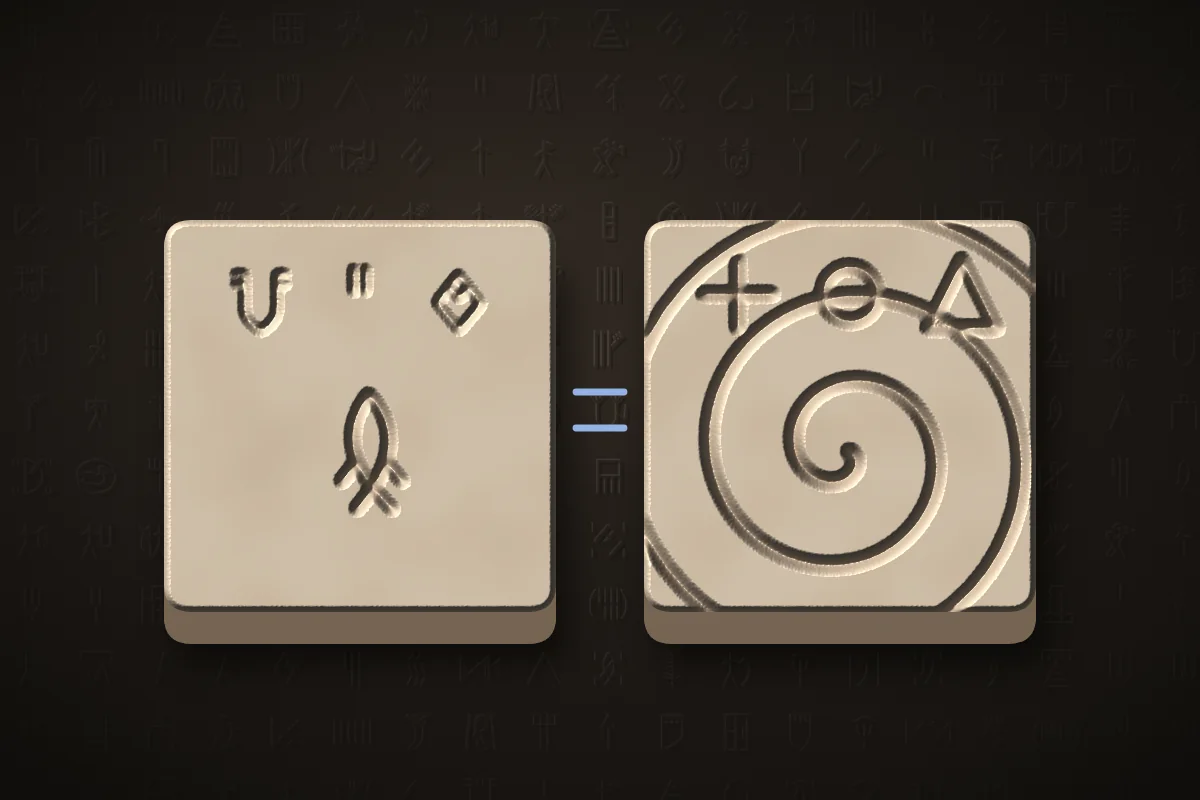
An invented symbol system with no sounds looks just like the Indus script

Raghavendra · arXiv 2608.02999 (SIGIL)

If a made-up emblem system matches every statistic, statistics alone cannot prove the signs are writing.

He built an artificial system of emblems with no language behind it. It matched the Indus script on every measure he could compute exactly. Programs that “decode” by matching dictionaries happily read it as English, Sanskrit or Tamil. So those numbers cannot settle whether the Indus signs write a language.

SIGIL is a sound-free emblem generator matched to Indus on every exactly scorable statistic (entropy, Zipf, n-grams, positional concentration). Dictionary-hit decoders produce fluent readings of it in several languages. This closes entropy- and Zipf-style arguments in both directions.

Using it

What we take from it: Every new claim we test must also fail on SIGIL-style emblem data. We use it as a standing negative control.

Read the full summary: An invented symbol system with no sounds looks just like the Indus script →
Preprint

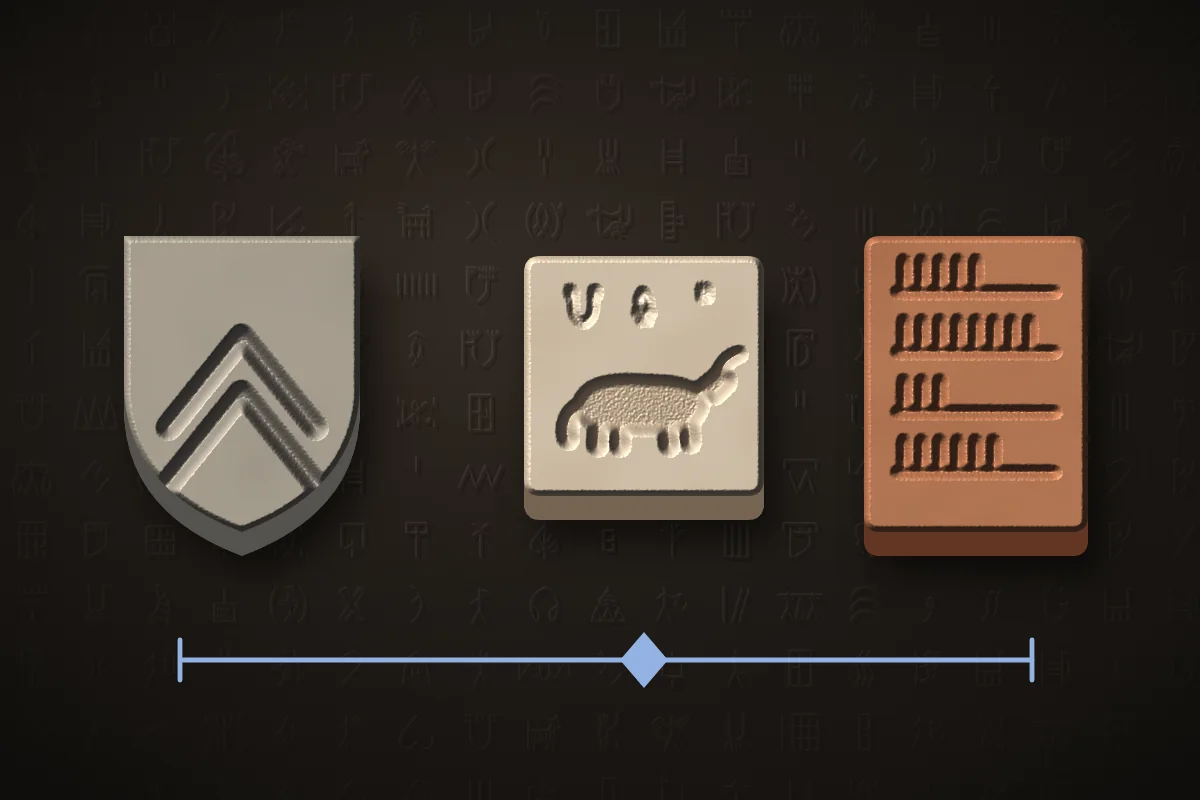
The Indus script sits between coats of arms and paperwork

Nair · arXiv 2604.17828

Compared with made-up systems of known kinds, Indus falls between heraldry and administrative records.

The author built artificial sign systems of different kinds, such as coats of arms and office records, and compared their statistics with the Indus texts. The Indus script lands between the two.

A synthetic-baseline scorecard: generated heraldic, administrative and linguistic corpora scored on shared statistics. Indus sits between heraldic and administrative baselines.

Background

What we take from it: Agrees with our finding that each kind of object has its own vocabulary. Nothing new to run.

Read the full summary: The Indus script sits between coats of arms and paperwork →
News

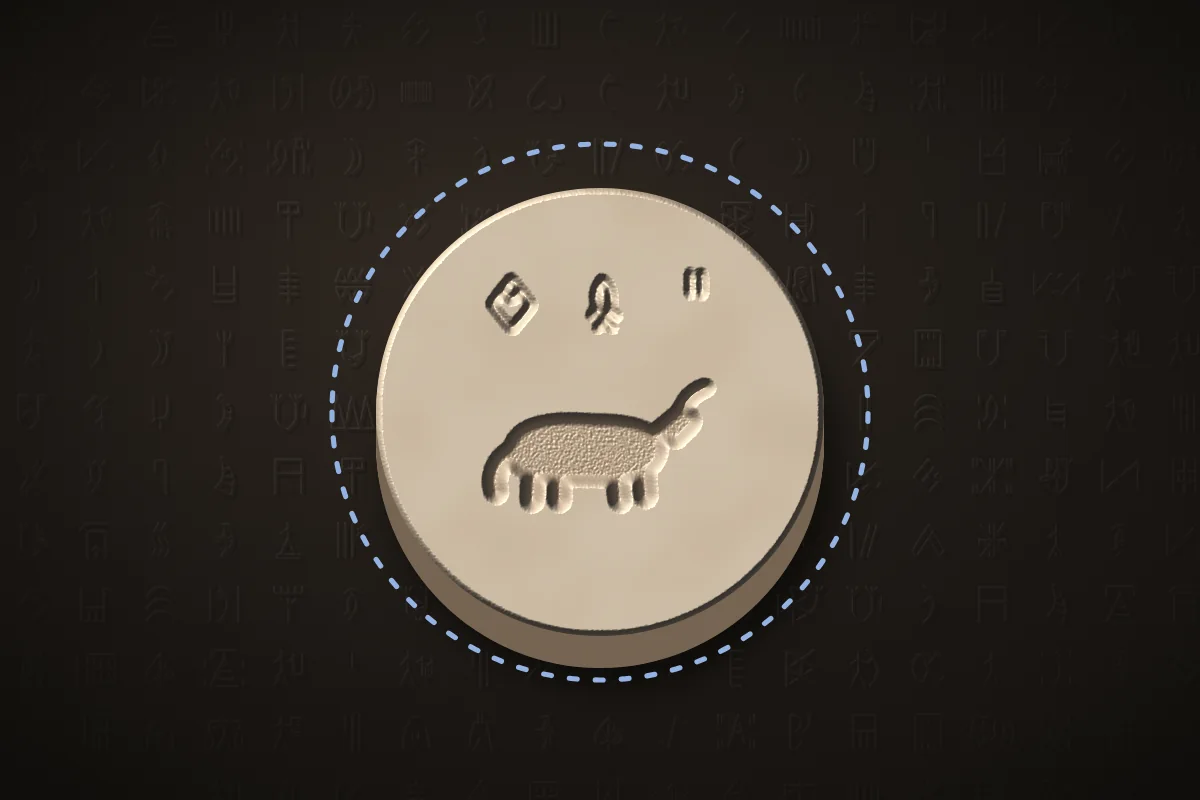
Reported: a new seal with Indus signs from the UAE

News report (no excavation report yet) · Umm al-Quwain, UAE

A round Gulf-style seal with Indus signs and a humped bull, dated to about 2300 BCE. Not yet verified.

A news site reports a small round seal of the Gulf type, with Indus signs and a humped bull, from Umm al-Quwain. The excavation report, the exact find spot and a readable photo of the signs have not been published, so we cannot use it yet.

Known only from a news aggregator. Site (possibly Tell Abraq), excavator and sign sequence not given. Not in our corpus of objects found abroad.

Waiting on data

What we take from it: We looked for an excavation report and found none, and the news page is now offline. It stays out of our data until the find is published.

Read the full summary: Reported: a new seal with Indus signs from the UAE →
Preprint

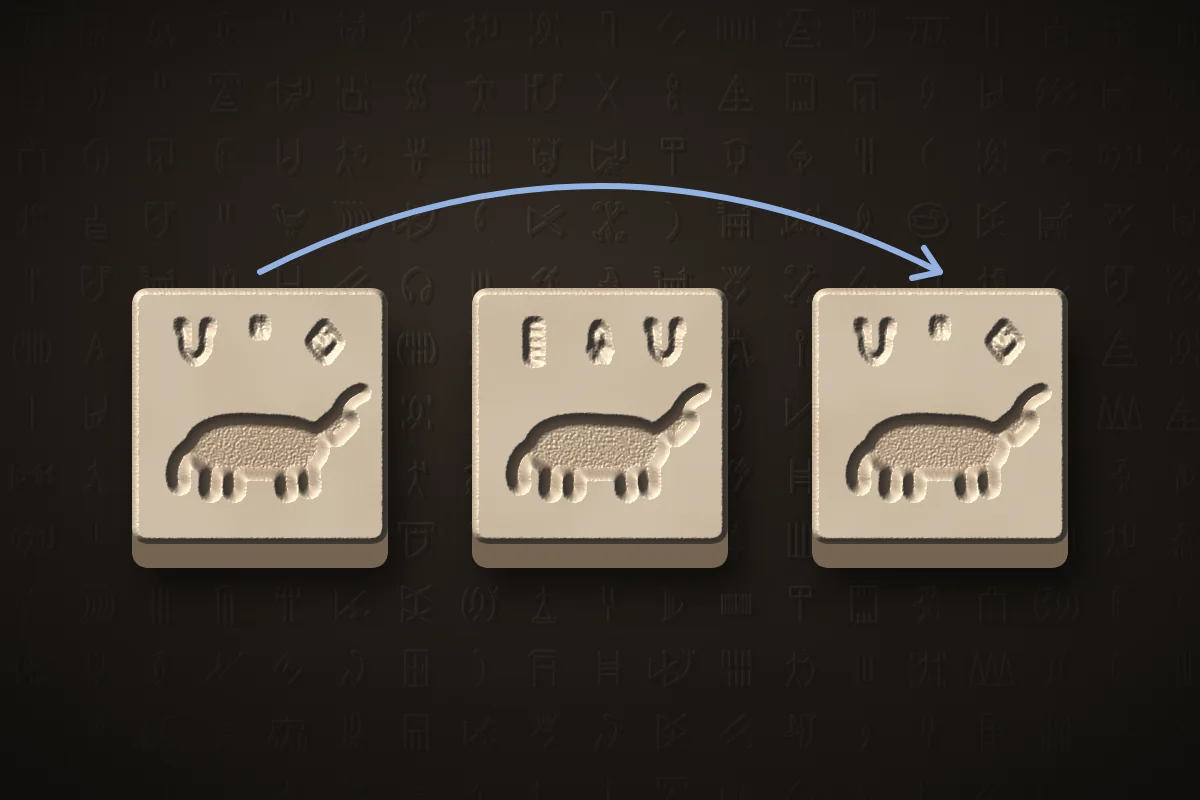
The “registration code” reading fails its own predictions

Kriger and Hunt · Zenodo 19103880

They argued seal texts work like ID numbers. On 646 seals, the texts repeat more than chance, not less.

This preprint argued that seal texts are like registration numbers: each one unique, with numbers in fixed places. We ran their tests on 646 Mohenjo-daro unicorn seals. The texts turned out less unique than chance, and the number patterns did not hold.

Uniqueness 88.2% vs 99.2% under random redeal (below every null draw). Numerals in the second-to-last slot 19.0% vs 18.7% shuffled (p = 0.46). Their dominant “2” is mostly the M99 connective of the opening formula. Near-duplicates differ at an edge in 20 of 80 pairs, so “never at edges” is false. The edge pattern in positional entropy replicates, but it was already known.

Closed

What we take from it: Nothing to borrow. Their best result was already known, and the rest fails.

Read the full summary: The “registration code” reading fails its own predictions →
Book

The full edition of Linear Elamite, the script read through kings’ names

Desset and colleagues · Linear Elamite Texts from Susa (OrientLab SM 10)

All the Susa texts of the script read in 2022, the most recent ancient script to be read.

Linear Elamite, from what is now Iran, was read in 2022. The key was royal names already known from cuneiform, on objects dated well enough to predict which names should appear. This book publishes the full set of texts from Susa.

Complete edition of the Susa Linear Elamite texts. The decipherment (Desset et al. 2022, ZA 112:11-60) is anchored on royal names and titles known from cuneiform. Critics question parts of it: Dahl 2023 (archaising, not purely syllabic) and Mäder (about 70% phonetic).

Tested

What we take from it: We used Linear Elamite as a known-answer test for our own name-matching method. The method could not recover its values, so we stopped it rather than run it on Indus.

Read the full summary: The full edition of Linear Elamite, the script read through kings’ names →
Event

India’s archaeology agency held a three-day meeting on the script

Archaeological Survey of India · Decipherment of Indus Script: Current Status and Way Forward, 20–22 Aug 2025

A national meeting on the state of decipherment. No proceedings yet.

The Archaeological Survey of India brought researchers together for three days to review where decipherment stands. Only the programme is public so far.

Programme only. No proceedings or papers found as of November 2026.

Waiting on data

What we take from it: We have asked the agency whether readings proposed there can be scored on our open test bench.

Read the full summary: India’s archaeology agency held a three-day meeting on the script →
Paper

Teaching computers to find signs and animals in seal photos

Dixit and colleagues · Journal of Computer Applications in Archaeology 8(1):156–169

Image models that spot signs and animal motifs on photographs of seals.

The team trained image models to find the signs on a seal photo, name each one, and recognise the animal. Only sample data is public. The full set is available from the authors on request.

YOLOv3 sign detection, MobileNet sign classification and motif identification on seal photographs. The repository (DM-BiCLab) holds sample data only.

Idea, needs data

What we take from it: Reading signs straight from photos could settle the 1-in-5 disagreements between the two main transcriptions. We need open images first.

Read the full summary: Teaching computers to find signs and animals in seal photos →
Preprint

Do Indus signs look more like scripts from the Himalayas than from Mesopotamia?

ivc2tyc project · arXiv 2503.21074

An image-AI comparison claims Tibetan-Yi corridor scripts resemble Indus signs most.

Using image AI, the authors compare sign shapes and report that scripts from the Tibetan-Yi corridor, such as Naxi Dongba and Yi, look more like Indus signs than proto-cuneiform or Proto-Elamite do. Looking alike does not mean sounding alike, but their open sign images are useful.

Hybrid vision embeddings over glyph image sets for Indus, proto-cuneiform, Proto-Elamite and five Tibetan-Yi scripts (GitHub oohalakkadi/ivc2tyc, MIT; recommended by PCI Archaeology). Shape similarity carries no sound values: Linear Elamite look-alikes failed blind (p = 0.83).

Tested

What we take from it: We red-teamed it. The claim technically survives, but its whole edge comes from one small script, Ba-Shu. Proto-cuneiform is closer to Indus than four of the five Himalayan scripts.

Read the full summary: Do Indus signs look more like scripts from the Himalayas than from Mesopotamia? →
Study

15,184 marks on South Indian pottery, many with Indus look-alikes

Rajan and Sivanantham (Tamil Nadu Archaeology) · Tamil Nadu graffiti study

Most pottery marks from 140 Tamil Nadu sites have a similar-looking Indus sign.

Archaeologists in Tamil Nadu catalogued 15,184 marks scratched on pots from 140 sites and found that most have an Indus sign that looks similar. The marks are about 1,000 years younger, and most stand alone rather than in texts.

Shape parallels for roughly 60–90% of marks. Gap of over 1,000 years; mostly single marks. Earlier work found that look-alike marks do not behave like the Indus signs they resemble.

Closed

What we take from it: We tested whether look-alikes behave alike. They do not, so this route is closed for now.

Read the full summary: 15,184 marks on South Indian pottery, many with Indus look-alikes →
Paper

How computers are opening up Proto-Elamite, the Indus script’s unread neighbour

Monroe, Kelley, Born and Sarkar · Near Eastern Archaeology 88(4):316–323, building on Born et al. 2019–2023

Without knowing the language, they found which signs head an entry, which are built from parts, and which number system each count uses.

Proto-Elamite, from Iran, is unread and about as old as the Indus script. Teams have used computers to learn how its texts are organised: which signs start an entry, which complex signs are made of simpler ones, and which counting system each number belongs to, by looking at what is being counted. None of this needs the language.

Born et al. (2019, 2021, 2023): topic models (LDA) for genres, “header” signs, complex-sign compositionality, and disambiguation of numerals by number system. These are the methods that worked on an undeciphered administrative script without a language. They have not been applied as a set to the Indus texts.

Tested

What we take from it: We tried the pieces that fit. Indus signs that look like Proto-Elamite or proto-cuneiform signs do not behave like them (0 of 5 tests), complex signs do not split into their parts, and no known number system matches the Indus counts. Still untried: letting a model find genres from scratch.

Read the full summary: How computers are opening up Proto-Elamite, the Indus script’s unread neighbour →

02Landmarks

The papers that shaped the field

Including two from other scripts whose methods we borrow.

Other scripts

Reading Maya history before reading a single sound

Tatiana Proskouriakoff · American Antiquity 25(4):454–475

She matched glyph patterns to the lifespans of rulers, and found births and accessions without sounding anything out.

Maya monuments carry dates. Proskouriakoff noticed that the dates on each group of monuments spanned a human lifetime, and that the same glyphs always sat beside a first date (birth) and a later one (taking the throne). So the texts were about real rulers. She worked out what glyphs meant from the pattern of events, years before anyone could read their sounds.

Pattern-of-dates analysis at Piedras Negras: recurring glyph-date pairings mapped onto plausible life events (birth, accession, death), with intervals constrained by human lifespans.

Testing now

What we take from it: We tried one version: seals from the same house share no more signs than seals from nearby houses. Now testing the rest: whether seals broken on purpose, buried with someone, or found at gates carry different signs.

Read the full summary: Reading Maya history before reading a single sound →
Corpus

The list of every text that made the field possible

Iravatham Mahadevan · The Indus Script: Texts, Concordance and Tables

417 signs, numbered, and every text then known. The M-numbers on this site come from it.

Mahadevan drew every sign, gave each a number and listed every known inscription, with every place each sign appears. Almost all statistical work since, including ours, starts from this list.

Sign list of 417 signs with a full concordance of the texts then known. Showed the regular positions of signs, such as the jar sign usually ending a text. Allograph splitting differs from the later Wells/Fuls list (676–713 signs).

Using it

What we take from it: The backbone of our main transcription.

Read the full summary: The list of every text that made the field possible →
Book

The best-known case that the signs write an early Dravidian language

Asko Parpola · Deciphering the Indus Script (Cambridge University Press)

Fish sign = mīn, a word that means both “fish” and “star” in Dravidian languages.

Parpola argues the signs are mostly word-signs that also work like puns, the way a picture of a bee plus a leaf can spell “belief”. His famous example is the fish sign: in Dravidian languages the word mīn means both fish and star, so a number plus fish could name a star group.

Logo-syllabic, rebus-based Proto-Dravidian reading. Fish M59 = mīn “fish/star”; six + fish = aṟu-mīn (Pleiades); seven + fish = eḻu-mīn (Ursa Major); intersecting circles = muruku. About 400 signs is too many for a syllabary and too few for pure word-writing.

Tested

What we take from it: We turned his readings into predictions and tested them. Six + fish holds as a fixed unit; “seven stars” is not supported; the fish signs group together but do not behave like god names.

Read the full summary: The best-known case that the signs write an early Dravidian language →
Paper

The case that the signs might not be writing at all

Farmer, Sproat and Witzel · Electronic Journal of Vedic Studies 11(2)

Texts are very short, and many signs are rare: maybe these are symbols, not a script.

The authors pointed out that Indus texts are very short, about five signs on average, that many signs appear only once, and that no long text has ever been found. They argued the signs could be a system of symbols, like road signs or coats of arms, rather than writing that records speech.

Arguments from text length (mean about 4.6 signs, longest single-surface text 17), rare-sign frequency and the absence of long texts. Sparked the language-vs-symbols debate continued by Rao et al. 2009 and Sproat 2010 and 2014.

Using it

What we take from it: We test whether the signs are language at all, instead of assuming it.

Read the full summary: The case that the signs might not be writing at all →
Debate

Does sign order prove it is a language? The numbers say no

Rao et al. 2009 (Science); Sproat 2010, 2014 (Language) · Science 324; Language 90:457

A measure of how predictable the next sign is put Indus near languages. Critics showed non-writing scores there too.

Rao’s team measured how predictable the next sign is and found the Indus script sits in the same band as languages. Sproat replied that symbol systems that are not writing can score the same way, and that two better measures put Indus with non-writing. Later work, including SIGIL, settled it: these numbers alone cannot decide.

Conditional entropy of sign bigrams (Rao et al. 2009); n-gram restoration of missing signs (Yadav et al. 2010, PLoS ONE). Sproat (2010, 2014): the entropy band does not separate writing from non-writing; two measures that do put Indus and Pictish on the non-linguistic side.

Closed

What we take from it: Treat entropy, Zipf and n-gram arguments as closed in both directions.

Read the full summary: Does sign order prove it is a language? The numbers say no →
Paper

Indus signs used in a new way on seals from the Gulf

Steffen Laursen · Arabian Archaeology and Epigraphy 21

Round seals from the Gulf use Indus signs in combinations rarely seen at home.

Traders around Bahrain made round seals of their own style but carved Indus signs on them. Laursen showed these seals use the signs differently, for example often putting a “twins” sign at the front. One explanation is that local names were written with borrowed signs.

Gulf-type round seals show an excess of the prefixed “twins” sign and sign pairs unseen at home. Suggests Indus signs adapted to another language in the Gulf.

Tested

What we take from it: Our round-seal finding builds on this, and adds that round seals found in Indus cities break the order too.

Read the full summary: Indus signs used in a new way on seals from the Gulf →
Other scripts

Computers can crack a script, if they know a related language

Snyder, Barzilay and Knight 2010; Luo, Cao and Barzilay 2019 · ACL 2010; ACL 2019

Ugaritic and Linear B were re-deciphered by machine, but only by matching them to Hebrew and Greek.

Machine learning re-cracked two ancient scripts: Ugaritic, matched against Hebrew, and Linear B, matched against early Greek. The trick only works when you already know a closely related language. For the Indus script, no such language is known.

Snyder et al. 2010: 29 of 30 Ugaritic letters recovered via Hebrew cognates. Luo et al. 2019: 67.3% of Linear B cognates recovered via Greek. Luo et al. 2021 found no strong evidence that Basque is related to Iberian.

Closed

What we take from it: We tested the planted-language version at Indus size. Without the right language, it fails, so this route waits for an outside clue.

Read the full summary: Computers can crack a script, if they know a related language →
Genetics

DNA from Rakhigarhi: who the Indus people were

Shinde et al. (Cell); Narasimhan et al. (Science) · Cell 179; Science 365

One ancient genome: no steppe ancestry, and close links to later South Indian populations.

Scientists read the DNA of a person buried at the Indus city of Rakhigarhi. It had no ancestry from the Eurasian steppe, which arrived in South Asia later, and it is related to the main ancestry of later South Indians. That fits an Indus language that was not Indo-European, perhaps related to Dravidian, but genes do not prove a language.

Genome I6113 (1 of 61 skeletons screened): Iranian-related plus AASI ancestry, no steppe or Anatolian farmer ancestry. Narasimhan et al.: an “Indus Periphery Cline”; steppe ancestry arrives after about 2000 BCE.

Background

What we take from it: Background only. It narrows the likely language families but gives no sign values.

Read the full summary: DNA from Rakhigarhi: who the Indus people were →
Paper

The texts as labels for goods and permits, not names

Bahata Ansumali Mukhopadhyay · Humanities and Social Sciences Communications (2019, 2021, 2023)

Stroke signs as units of measure, crop signs as goods, and no personal names.

Mukhopadhyay reads the inscriptions as practical labels: what a parcel holds, how much, and who may pass, rather than people’s names. Stroke signs would be units whose value depends on the goods, and some signs would stand for crops or other commodities. In 2025 she proposed the fish signs mean gems.

Logographic or semasiographic “formalised data carriers”: metrological strokes, commodity signs after numerals, the jar as a phrase-final function sign, Kanmer tablets as gate passes; pīlu “elephant/tooth” as a loanword (2021); fish = maṇi “gem” (2025, SSRN 5079207).

Next to test

What we take from it: A first test found no sign tied to a craft at two sites, but it had too little data to tell. The fish = gem prediction needs find spots from bead workshops, which we have asked excavators for.

Read the full summary: The texts as labels for goods and permits, not names →
Paper

Linear Elamite read, through kings’ names

Desset, Tabibzadeh, Kervran, Basello and Marchesi · Zeitschrift für Assyriologie 112:11–60

The most recent ancient script to be read, and a model of what the Indus script is missing.

The team read Linear Elamite by finding the names of kings they already knew from cuneiform, written on silver beakers that could be dated. Each name gave the sounds of several signs. The Indus script has no such object yet: no text in a known script that names an Indus person.

Anchored on royal names and titles from cuneiform on datable objects (silver gunagi beakers, Desset 2018). Critiques: Dahl 2023; Mäder; Kelley et al. 2022 call the proposed Proto-Elamite values premature.

Using it

What we take from it: This is why we search for names of people from the Indus region in cuneiform records, and asked museums for seal impressions on tablets that name them.

Read the full summary: Linear Elamite read, through kings’ names →
Other scripts

Letting the computer decide which shapes are the same sign

Corazza and colleagues · PLOS ONE (Cypro-Minoan)

Images plus context sorted Cypro-Minoan’s variant shapes into signs.

Scholars disagree about whether two similar shapes are one sign or two. For Cypro-Minoan, this team let a model look at each sign’s picture and where it appears, and group them. The Indus script has the same problem: the two main sign lists count about 400 and about 700 signs.

Sign2Vec: unsupervised clustering on image features plus distributional context, validated on Cypro-Minoan with known-answer checks.

Testing now

What we take from it: Testing now. We first try the method on scripts whose true sign list we know. If it cannot rebuild those lists, we will not trust what it says about the Indus list.

Read the full summary: Letting the computer decide which shapes are the same sign →

03Ideas

Ideas we are borrowing, most promising first

Each comes from a paper above. The open ones mostly wait on find-spot records and photographs we have asked for.

  1. Testing now
    Match sign patterns to what happened to each seal: broken on purpose, buried with someone, found at a gateWe tried one version: seals from the same house share no more signs than seals from nearby houses. Now testing the rest: whether seals broken on purpose, buried with someone, or found at gates carry different signs.From Tatiana Proskouriakoff, 1960
  2. Next to test
    Check whether fish signs cluster at bead-making sites, as the “fish = gem” reading predictsA first test found no sign tied to a craft at two sites, but it had too little data to tell. The fish = gem prediction needs find spots from bead workshops, which we have asked excavators for.From Bahata Ansumali Mukhopadhyay, 2019–2023
  3. Testing now
    Build the sign list from pictures plus context, to settle about 400 vs about 700 signsTesting now. We first try the method on scripts whose true sign list we know. If it cannot rebuild those lists, we will not trust what it says about the Indus list.From Corazza and colleagues, 2022
  4. Idea, needs data
    Read signs straight from seal photos, to fix the 1-in-5 disagreements between transcriptionsReading signs straight from photos could settle the 1-in-5 disagreements between the two main transcriptions. We need open images first.From Dixit and colleagues, May 2025

Already tested

  1. Tested
    Use the Proto-Elamite toolkit: look-alikes, compound signs and number systemsWe tried the pieces that fit. Indus signs that look like Proto-Elamite or proto-cuneiform signs do not behave like them (0 of 5 tests), complex signs do not split into their parts, and no known number system matches the Indus counts. Still untried: letting a model find genres from scratch.From Monroe, Kelley, Born and Sarkar, 2025
  2. Tested
    Grade the new sign-restoration model fairly, with near-copies kept out of its test setWe graded it. 36% of its test texts have a near-copy in its training texts. On clean texts the neural model does no better than a simple three-sign model (28.5% vs 29.8% right on the first guess).From Kanichira, Singam, Katyal and Somala (IIT Hyderabad), 12 Nov 2026
  3. Tested
    Check a sharp grammar rule: one sign that supposedly never follows the arrow signWe tested it. The pattern shows in reading order on the main texts, but not on texts kept aside, and gaps this sharp are common: 24 of 57 similar sign pairs have one. So it is real but not special.From Dominik, 12 Oct 2026
  4. Tested
    Test the claim that Indus signs look most like Himalayan scriptsWe red-teamed it. The claim technically survives, but its whole edge comes from one small script, Ba-Shu. Proto-cuneiform is closer to Indus than four of the five Himalayan scripts.From ivc2tyc project, Mar 2025